

4 October - 18 October 2026
Gallura, North-West Sardinia
Sound of Resilience
A sonic exploration of belonging, memory, and collective imagination
This autumn, SOPRA SOTTO invites an interdisciplinary group of creatives to Sardinia’s green West coast for a two-week residency to explore the theme:
'Sound of Resilience: a sonic exploration of belonging, memory, and collective imagination'.
The residency hosts musicians, (sound) artists, filmmakers, writers, researchers, activists and practitioners of all disciplines to explore sound as an inherently human and universal language.
A way to connect through the body, emotion and play, as well as to communicate a sense of belonging, identity, memory, resilience, resistance and collective imagination.

This residency explores sound and music as a language beyond the intellect, a vessel for shared human experiences of joy, pain, and beauty across generations and cultures, resonating through the body, emotion, and memory. Through music, voice, rhythm, vibration, silence, storytelling, and listening, spaces can be formed for connection, healing, gathering, ceremony and transformation.
Throughout humanity, music has functioned not only as artistic expression, but also as ritual, protest, war cry, oral archive, celebration, resistance, and a way of carrying collective knowledge. The residency approaches sound as both an artistic medium and a social practice, exploring themes of community, cultural resilience and remembrance, emotional expression and processing and imagining alternative futures. It invites ways of communication, storytelling and forms of knowledge that are intuitive, sensory and non-linear.
The residency welcomes a wide range of practices. While music and song form an important point of departure, the open call also embraces experimental electronic sound, traditional and folkloric vocal practices, communal singing, field recording, dance, performance, multimedia installation, film, writing, poetry, research, social practice, curation, healing practices, activism, and interdisciplinary work where sound intersects with other artistic forms.
Through a co-created programme of workshops by residents for residents, an intentional communal experience, as well as immersion in the Sardinian surroundings for inspiration and exchange, the residency offers a process-based environment for meaningful collective experimentation.
After several years of organizing residencies across Italy and the Netherlands, SOPRA SOTTO begins a new chapter based in Sardinia. This first residency of many, hosted in an old farmhouse located in the Gallura hills near the West coast, marks the beginning of ongoing eco-cultural programs rooted in the Sardinian landscape, inspired by its communities and cultural traditions.
SARDINIA
An important source of inspiration for the theme is Sardinia itself, where ancient and localized practices of sound, song, and dance carry stories of identity, memory, and resilience, inviting engagement with the island’s turbulent cultural histories.
Throughout its history and in our current time, the island has been shaped by successive waves of outside rule, while local languages, customs, spiritual traditions and ways of life have continually adapted and endured. Music has been one of the ways this cultural memory has been preserved and passed on.
Sardinian traditions remind us that sound and dance has long functioned as much more than performance, but rather as a means for storytelling, remembrance, belonging, and the transmission of knowledge across generations. They also reflect Sardinia's layered past, where different cultures have intertwined, creating a rich and evolving musical heritage.
INTENTION SOPRA SOTTO residencies approach artistic practice as a powerful tool for collective imagination and a potential catalyst for societal transformation. Artists, musicians, researchers, and creative practitioners do not only respond to the world around them, but also shape the stories, perspectives and culture through which we understand it. (Gramsci) Within this process, sound holds a unique role. It reaches us through the senses and the body, interacts with emotion and memory, and carries stories, identities, and traditions across time. Sound can preserve what has been inherited while opening pathways toward what is yet to come. This residency explores how sonic practices can nurture more connected, resilient, and caring communities. It asks how collective listening, singing, storytelling, and shared sonic experiences can strengthen relationships between people, place, and ecology, and how artistic practices can generate new narratives rooted in reciprocity, belonging, and collective imagination. The residency itself is a lived experiment in togetherness. By sharing daily life for two weeks of cooking, learning, creating, and spending time in nature, it creates a space for exchange, reflection, and collaboration beyond productivity-driven systems. Rather than focusing on finished outcomes, the residency prioritizes experimentation, cultural exchange, rest, and play. It is an invitation to slow down and to listen to ourselves, to one another, to the landscape, and to the stories carried through sound.
Residents

Marthe Perret
Marthe Perret is born in Rennes France she studied film at KASK, academy of fine arts , Ghent. Today, she lives and works in Brussels, accompanying other filmmakers on their documentary projects as an editor or camera operator.
In research that is often restless and transformative, she seeks to explore notions of belonging, heritage, emancipation and resistance of identities made fragile by dominant narratives. Her documentary practice unfolds across the scales of the collective, the family and the intimate, where relations and dialogue are at the center.
Mercedes comme papillon (2025) is a portrait of her friend Luisa and the women of her family, part of a roma community, woven around their flamenco gatherings, and their perspectives on identity and desires.
In her latest film, Des cailloux derrière ton dos (2026), she addresses a letter to her grandfather trying to grasp how the Nakba of 1948 in Palestine continues to resonate silently within the family. It is an attempt to make visible what has been kept secret, in order to search for the missing images and resist forgetting.
Together with Ida van Koolwijk and Luzia Johow she is working on a documentary film project around polyphonic singing. The project follows, among others, amachitiama, a Brussels-based queer trio reviving Italian polyphonic traditions as political resistance, exploring themes of labor, migration, and oppression. During the residency, they’ll research Sardinia’s singing traditions and connect with interdisciplinary artists.

Ayeda Esmaili
Moving between heritages as an Iranian-Canadian DJ, sound healer, and archivist based in the Netherlands, Ayeda approaches her practice from the intersection of sonic frequencies, somatic movement, and collective care.
Grounded in a lineage where dance was an undeniable part of family life and connection, Ayeda views the dance floor not merely as a site of celebration, but as a crucial sanctuary for healing and liberation.
Drawing on her practice in sound healing, field recording, and electronic music, her work transforms sound into a bridge between memory and presence.

Kıvanç Sert
Kıvanç (they/he) is a Rotterdam-based artist born in Ankara (1992), working across art, design, and sound. Their practice moves through play, improvisation, and everyday tools, treating these not just as mediums but as methods of inquiry.
With a curiosity about cultures, ideologies, and the relationships between objects, users, and space, Kıvanç uses creative production as a means to pose questions, expose tensions, and imagine alternative forms of collective life. They use sonic waves as a tool to tell stories of struggle, memories of destruction.
Their ongoing research (Tea and Land Stories) examines the intricate relationships between land and people, with a particular focus on the cultivation of soil, plants, and communities. Through this, they explore how material and symbolic terrains are shaped, lived, and transformed.
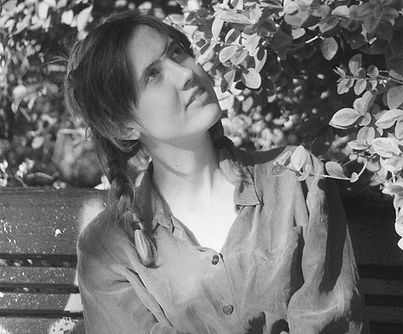
Luzia Johow
Luzia Johow (born in Austria in 1995), is a filmmaker, editor and sound recordist, living nomadically. After living in France and working in postproduction and for festivals, she moved to Vienna, to earn a Bachelor of Arts in Film Editing at the Vienna Film Academy.
She edited the short film “Lullaby” by director Magdalena Chmielewska, which was voted Best Short Film at the 2022 Max Ophüls Prize and was part of Future Frames Karlovy Vary 2022. In 2024, she completed her Master’s degree in Film (Directing) at KASK in Ghent, Belgium.
Over the years, she has directed several short films, music videos and a documentary entitled “Bato Nebo”, which has been screened at various international festivals (premiering at DocLisboa 2021). Her more recent film on Canto a tenore in Sardinia is called "Il soffio dell'anima" and has been a starting point for an ongoing interest on multi-voice singing in Italy.
Together with Ida van Koolwijk and Marthe Perret (who will be introduced in upcoming posts) she is working on a documentary film project around polyphonic singing. The project follows, among others, amachitiama, a Brussels-based queer trio reviving Italian polyphonic traditions as political resistance, exploring themes of labor, migration, and oppression. During the residency, they’ll research Sardinia’s singing traditions and connect with interdisciplinary artists.

Ida van Koolwijk
Ida van Koolwijk lives in Ghent and makes films.
Rooted in an anthropological and sociological background, her work captures personal narratives that reflect the wider human experience.
Her cinema serves as a window into alternative ways living together and organizing society, inspiring audiences to seek personal freedom and live more equally together.
Together with Marthe Perret and Luzia Johow she is working on a documentary film project around polyphonic singing. The project follows, among others, amachitiama, a Brussels-based queer trio reviving Italian polyphonic traditions as political resistance, exploring themes of labor, migration, and oppression. During the residency, they’ll research Sardinia’s singing traditions and connect with interdisciplinary artists.

Viola Marielli
Viola Marielli, born in Sassari, trained as an actress at the Centro Sperimentale di Cinematografia (Lombardy campus) and continued her training in the Meisner Technique and Grotowski-inspired theatre, with a particular focus on the oral-tradition songs of the Mediterranean.
Alongside her artistic path, she is studying Psychological Sciences and Techniques at the University of Turin.
She also studies traditional Sardinian dance and oral-tradition song, from canto a cuncordu to canto in re, and is a member of a historical dance group that performs at medieval reenactments across Sardinia.
In August 2026, she took part in "Progetto 888," a performative walk with eight female artists celebrating the 800th anniversary of the death of St. Francis and the 80th anniversary of women's suffrage in Italy, performing "Cantica," a piece of sacred songs alongside oral-tradition songs of struggle, resistance and work.
Her research weaves together community, ritual, theatre and song as tools for care and well-being.

Margherita Frau
Margherita Frau trained as an actress at the Académie Internationale des Arts du Spectacle in Paris, specializing in ‘commedia dell’arte’ under Carlo Boso.
As a singer-songwriter, she composes folk and socially conscious songs in both Italian and French, pursuing a solo project dedicated to female singer-songwriters from Italy and France, spanning the 1960s to the present day.
Alongside this, she explores traditional Sardinian music, studying ‘canto a chitarra’ and ‘concordu’ (sacred songs), and has forged a deep connection with Sardinia through the study of its traditions and language.

Setareh Nafisi
Setareh Nafisi is an Iranian-born, Amsterdam-based composer, pianist, performer and interdisciplinary artist.
Her work combines contemporary classical music with experimental electronic sound, drawing on composition and the spontaneity of improvisation. She brings her musical language into dialogue with space, the body and poetry, creating experiences that give artistic form to intimate human narratives.
Her work has been presented internationally, at established festivals in the Netherlands and in independent experimental spaces. She works across concert settings and site-responsive performance contexts.
She is currently pursuing a Professional Doctorate at the Prins Claus Conservatorium, Hanze University of Applied Sciences, where she also works as a lecturer in Music in Context. Her artistic research explores how embodied experiences of loss and grief can be translated into sound. Through the development of sonic objects, she investigates how individual experiences can become part of collective, music-led rituals of connection and release.
s
Collaborators

Ilaria Orefice
Ilaria Orefice is a singer, researcher, and teacher of polyphonic (overtone) singing, whose work explores the voice as a space for listening, liberation, research, and connection.
Since 2018, Ilaria has been studying and experimenting with the vocality of bassu and contra: the deep, guttural voices at the foundation of Sardinian ‘canto a tenore’. Her research has led to the development of Canto a Tenore Femminile, exploring the possibilities of performing this traditional Sardinian vocal practice through female voices, with deep respect for its original techniques and cultural context.
In 2023, she founded the all-female group Feminas de Judu, bringing together Sardinian singers to further explore the techniques, harmonies, and expressive possibilities of canto a tenore. The research continues as a way of listening to, understanding, and contributing to the knowledge of one of Sardinia’s most distinctive vocal traditions.
During the residency, Ilaria lead a workshop on voice activation and liberation, active listening, inviting participants to explore the voice as a tool for expression, connection, and embodied awareness.

Jannemuru (Nicolò Mulas)
Jannemuru (Nicolò Mulas) is a Sardinian producer, sound artist, and performer whose research explores the relationship between landscape, memory, and sound.
Field recording is the starting point of Jannemuru’s sonic exploration, born from a deep connection with nature and the places he traverses. Listening becomes a way to engage with an environment, observe it, and gather its traces: natural and ambient sounds, as well as those of local culture. Each recording preserves the memory of a place and a moment, becoming living material from which music is built.
During the residency, Nicolò leads a field recording workshop, inviting residents to explore listening as a way of connecting with and documenting the places around them.

AMÆMI (Martina Grassani)
AMÆMI (Martina Grassani) is a sound artist and holistic practitioner whose work explores music as a space of embodied perception and relationship.
Rooted in a background spanning philosophy, sex education, and embodied tantric practices, AMÆMI’s work moves between acoustic instruments, ambient composition, and the study of the natural world. Her practice invites us to explore listening and rest as forms of resistance to a system of constant action and consumption, and art as a ritual of return.
During the residency, AMÆMI offers a two-part practice: beginning with an intimate talk in an immersive natural setting, and moving from reflection into experience through a sound bath. Guided by a short meditation, participants will gradually enter the sounds of her EP; moving from word to silence, from outer to inner, and from thought to embodied experience.

BLUEM (Chiara Floris)
BLUEM (Chiara Floris) is a London-based singer/songwriter, producer, and visual artist from Sardinia, whose work moves between music, sound, and visual practice.
After moving to the UK to study music, BLUEM self-released her first English-sung EP, Picolina, in 2018. Following three years of experimentation, she returned to her mother tongue for NOTE (2021), a project rooted in archaic sentiments and an exploration of instinctive and primordial love.
Her latest project, nou, released in May 2023, opens into vast landscapes of sound through pop songs and instrumentals, keeping femininity at the centre of its thematic world.
In 2024, BLUEM also took over the NTS airwaves with “Sardinian Special”, a programme dedicated to traditional Sardinian music and the women singers, instrumentalists and composers who have shaped the island’s musical landscape. Moving between archival recordings and contemporary voices, the show offered another entry point into the musical heritage that runs through her practice.
Through BLUEM, music becomes a space for exploring identity, memory, instinct, and the relationship between contemporary sound and ancestral roots.
Chiara joins us an afternoon at the residency with collaborators Jasmine Färling and Clare Bottomley (a Helsinki-based artist collective), for a conversation about their collaborative work.

Jasmine Färling & Clare Bottomley
Jasmine Färling and Clare Bottomley are a Helsinki-based artist collective, and join us for an afternoon at the residency, for a conversation about their collaborative work with BLUEM (Chiara Floris) with our residents.
Through their joint work, they explore the communication methods of both their professional and personal relationships and, through this, broader phenomena in society through a queer lens. In May 2022, they spent a month at the Mustarinda artist residency working on the video piece How to communicate & other experiments. In January 2023, they did a researcher and artist residency with the Feminist Association Union and the Ida Salin Summer Home Fund, where the work Unbecoming was born.
In addition to the collective, they are both independent artists and have worked extensively in the cultural sector as photographers, artists and academics.
Jasmine Färling is a visual artist and a documentary photographer working across exhibitions and publications. Myths and legends often serve as the starting point for their practice, which explores how realities are constructed, the role of photography in the media and the power structures embedded within archives.
Clare Bottomley is a Helsinki-based artist, educator and doctoral researcher at Aalto University whose work focuses on ageing, queer aesthetics, self-portraiture, photographic re-enactment and expanded photographic technologies.
s